How to Sleep Better Naturally: Simple Things That Actually Help
I have become rather convinced that sleep is one of the most underrated routes to happiness.
Not enormous, life changing happiness. I am not suggesting eight hours will result in spiritual enlightenment or make you suddenly adore unloading the dishwasher. I mean the much more useful everyday sort. The sort where you quite like your family, can cope with an email and do not want to murder somebody for chewing.
Everything is simply less annoying when you have slept.
And the wonderful thing is that sleep is free.
Which is slightly ironic because we spend an extraordinary amount of money trying to get better at it. Mattresses. Pillows. Apps. Gadgets. Supplements. Elaborate things to wear on our wrists which tell us, rather smugly, that we did not sleep very well.
Over the years I have had a fairly complicated relationship with sleep. Periods. Babies. Small children. Work. Perimenopause. The usual female relay race of things determined to keep you awake. So I have tried quite a lot. What I have discovered is that sleeping better naturally is not really about finding one miraculous thing to knock you out at bedtime. It is much more about the small signals you give your body throughout the day. And, rather inconveniently for anyone who likes buying things to solve problems, some of the most useful ones cost absolutely nothing.
Sleep starts in the morning
This was probably the most useful thing I learned about sleep. Sleep does not begin when you get into bed. It begins when you wake up.
Our internal body clock responds strongly to light, so getting outside reasonably soon after waking helps tell the body that daytime has begun, which in turn helps it understand when nighttime should arrive later. So go outside. You do not need to hike anywhere, salute the sunrise or greet the dawn in activewear. Have your tea outside. Walk the dog. Potter around the garden. Even a grey Norfolk morning counts.
Move your body...
Movement helps too, although I prefer the word movement to exercise because exercise has somehow acquired an enormous amount of admin. There is the outfit. The class. The membership. The watch. The water bottle the size of a fire extinguisher.
Movement is much less exhausting. And the good news is that twenty minutes is plenty. Better still, nobody says the twenty minutes have to happen at the same time. Walk the dog. Dance while the kettle boils. Post a letter. Take the stairs. Five minutes here, ten minutes there. By lunchtime you may have accidentally exercised without having to tell anybody about it.
I am loving the Alo Wellness App at the moment, which is free and useful if you would occasionally like somebody else to decide what your limbs should be doing. Morning movement is particularly handy because you can get your daylight at the same time, but they absolutely do not have to happen together. Get outside in the morning. Move when you can. Your body is not keeping a spreadsheet.
And it certainly does not say, “Sorry. You were not wearing Lycra and three of those minutes involved putting the washing away, so I’m afraid none of that counts.”
It counts.
Give the day an ending
The trouble is, nothing really ends anymore. You can shop, work, watch television, answer emails and find out what someone you went to school with had for dinner, all from bed. The internet has never once said, “Bella, that is quite enough for tonight.” So apparently we have to.
Lower the lights. Turn off the big light. Put the phone down. I am deeply suspicious of the big light after about nine o’clock. Nothing good comes from the big light at bedtime.
Think about what we do with babies. Bath. Pyjamas. Low lights. A story. The same familiar sequence every night. We would not give a baby a large glass of wine, show it Instagram for forty minutes and then say, “Right. Sleep.”
And yet this is more or less what we do to ourselves.
Sleep needs a transition. We do too.
Warmth can be part of that transition. I love a bath or sauna, partly because you cannot really do very much in either. You sit. You breathe. You get warm. You stop. Nobody sensible is answering emails in a sauna.
If I do not have time for a bath, I use our Deepest Sleep Shower Mist. A few sprays in the shower and something I was going to do anyway becomes the beginning of bedtime.
That is the sort of sleep routine I like. Nothing requiring forty five minutes, specialist equipment and the discipline of an Olympic athlete. Just small things that fit into a life that is already happening.
Create little signals for sleep
Scent is a huge part of this for me. Smell is closely connected with the parts of our brain involved in memory and emotion, which is why a scent can suddenly transport you to your grandmother’s kitchen, a hotel you loved or a person you had completely forgotten about until approximately three seconds ago.
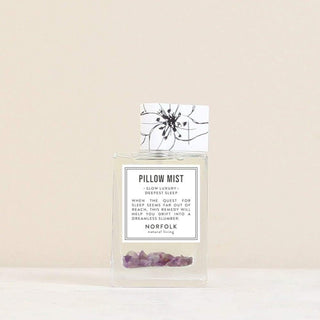
Lavender has also been studied for sleep and anxiety, with research suggesting that inhaling lavender may help reduce feelings of anxiety and support sleep quality. I use our Pillow Mist every night, but for me the really useful bit is the repetition. Same scent. Same little ritual. Eventually it becomes a sort of shorthand. We are done now. Nothing else is required. Sleep.
I also use our Magnesium Sleep Mist on my legs and shoulders before bed. Spray. Massage. Stop. Ours sinks in beautifully rather than leaving you feeling as though you have been lightly varnished, which feels important at bedtime.
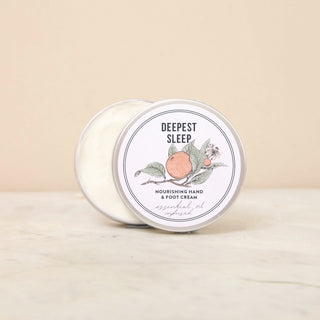
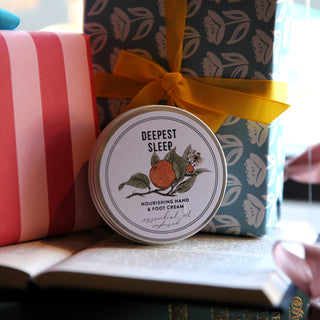
I love our Deepest Sleep Hand Cream for much the same reason. Not because applying hand cream is going to solve the great mysteries of sleep, but because for thirty seconds I massage my hands and do absolutely nothing else. This turns out to be surprisingly difficult.
So many of us get into bed still mentally carrying work, children, emails, tomorrow, something we forgot, something we should have said and something we absolutely should not have said. These little rituals are really just ways of saying: that is enough for today.
If sleep is proving difficult, I would also experiment with having your last coffee a little earlier. I realise this is exactly the sort of advice nobody particularly wants. But rather than declaring yourself a caffeine free person and becoming unbearable, move your last coffee earlier for a week and see what happens.
I think curiosity is much more useful than perfection when it comes to sleep. There is already quite enough to feel inadequate about.
And if you wake at 3.17am...
Ah. 3.17am. An old friend.
The most useful thing I have learned about waking in the night is not to turn it into an event. Being briefly awake is one thing. Realising you are awake and immediately beginning an internal inquiry into why you are awake is quite another.
First you look at the clock. Then the maths starts.
“If I go to sleep now, I can still get four hours and twenty seven minutes.”
Once you start doing sleep maths, it is over.
So do less. Do not check the time. Do not turn on the lights. Do not pick up your phone. Do not accidentally begin tomorrow.
This is why I keep my Pillow Mist underneath my pillow. I can find it without switching anything on. Spray. Breathe. No light. No clock. No information.
If my brain insists on having a meeting, I put on something magnificently boring and let it talk me back to sleep. I also love Jilly Cooper novels on Audible, because there is something about scandalous riders and faintly chaotic English country houses that I find extremely soothing.
I use one of those headphone headbands, which is deeply practical and makes me look absolutely dreadful. Fortunately there is nobody to impress because I am unconscious.
The nighttime brain, incidentally, is a terrible adviser. A slightly difficult email becomes the end of the business. Something one of the children said three days ago becomes a parenting crisis. You remember something embarrassing you said at dinner in 2012 and suddenly decide it requires a full investigation.
It does not.
If something genuinely will not leave me alone, I write a few words in a notebook beside the bed. On paper. Not my phone.
Nobody has ever picked up their phone at three in the morning and put it down twenty minutes later thinking, “Well, I feel much calmer now.”
Everything else is a morning problem.
It will almost certainly look better after breakfast.
Better sleep, happier days
There is no perfect bedtime routine that works for everyone forever. Bodies change. Lives change. Hormones certainly change.
So rather than attempting to overhaul your entire life tonight, pick one thing. Go outside tomorrow morning. Move a little more. Lower the lights in the evening. Find a bedtime ritual you genuinely enjoy. Move your last coffee earlier. See what happens.
Sleep likes signals, not pressure.
For me, better sleep is not about becoming brilliant at sleeping. It is about making sleep a little easier to find.
And perhaps sleep is a superpower for a much simpler reason than we think. It does not make life perfect. The washing will still be there. The emails will still be there. Someone will still have left their shoes in the middle of the floor.
You are just rather better equipped to find all of it funny.
You have a little more patience. Things are less dramatic. The people you love become rather easier to love.
Happiness, I think, is mostly ordinary life on a good day.
Sleep gives us a better chance of having one.
Even on a Tuesday.

Frequently asked questions about sleeping better naturally
What is the best way to improve sleep naturally?
Start with your mornings rather than obsessing about bedtime. Get outside in daylight soon after waking, move during the day and keep reasonably consistent sleep and wake times. In the evening, lower the lights and create a familiar wind down routine that tells your body the day is ending.
Does morning light help you sleep at night?
Yes. Morning light is an important signal for your circadian rhythm, the internal body clock that helps regulate when you feel awake and sleepy. Getting outdoors in the morning is one of the simplest ways to support that rhythm.
Can lavender help with sleep?
Research suggests that inhaled lavender may help support sleep quality and reduce feelings of anxiety. I also love scent because using the same fragrance each evening can become part of a familiar bedtime ritual. Our Pillow Mist is the one I keep underneath my pillow.
What should I do if I wake up at 3am and cannot get back to sleep?
Try not to make the awakening more interesting than it needs to be. Avoid checking the clock, bright lights and your phone. Stay quiet and relaxed and give yourself a chance to drift back to sleep. If your mind is busy, write down anything genuinely important or listen to something soothing and wonderfully boring.
What is a simple natural bedtime routine?
It does not need to be elaborate. Lower the lights, put your phone away, have a warm bath or shower and repeat a few calming things you enjoy. I use our Deepest Sleep Shower Mist, Magnesium Sleep Mist, hand cream and Pillow Mist as little signals that I am finished for the day.
How can I stop overthinking when I am trying to sleep?
Do not try too hard to force yourself to sleep. Give your mind something undemanding instead. Slow breathing, a familiar audiobook or a deliberately boring podcast can all help take your attention away from the fact that you are trying to fall asleep. And if your brain suddenly wants to solve your entire life at 3.17am, remember that almost everything looks better after breakfast.
Sweet dreams.
Bella x